
Wheat Sifter Machine
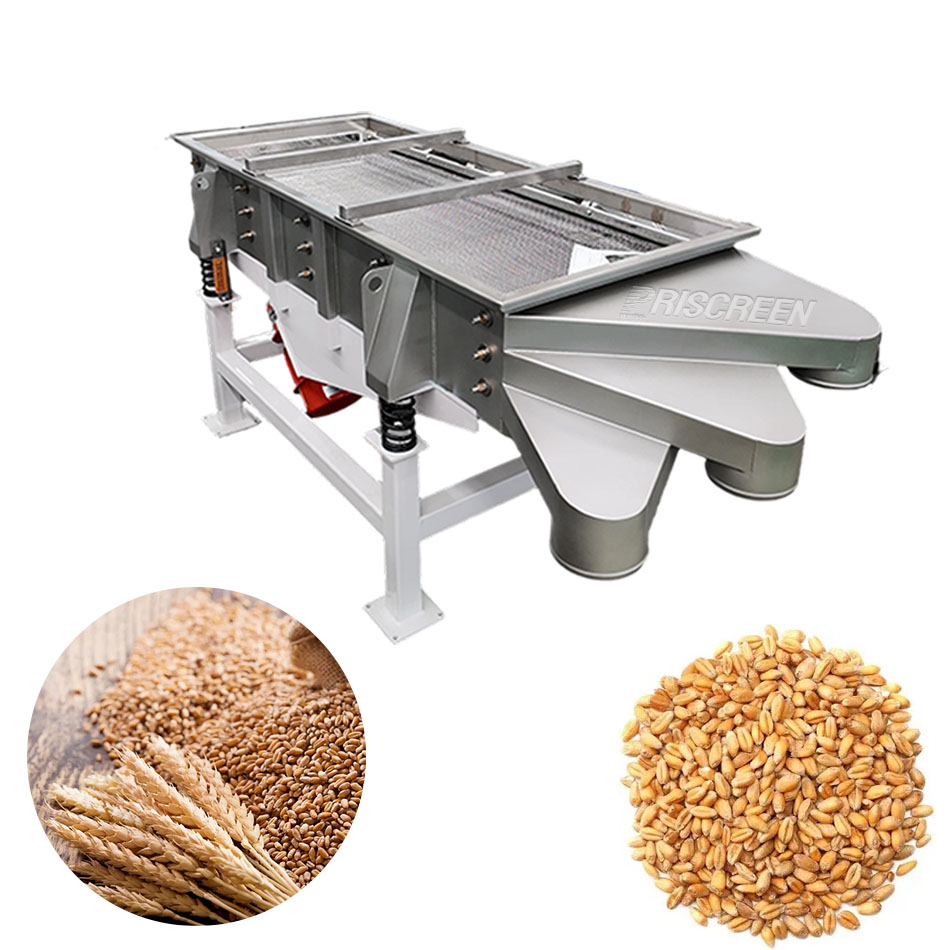
Wheat often arrives at a processing plant with a mixture of broken kernels, straw, dust, small stones and other unwanted particles. Before milling, storage or further processing, these materials may need to be separated from the usable grain.
A wheat sifter machine provides a mechanical way to screen wheat according to particle size. By selecting a suitable screen opening and machine configuration, processors can separate oversized and undersized particles from the main grain stream.
Henan Precision Screening Machinery supplies vibrating screening equipment for grain processing applications. We can customize the screen structure, feeding inlet, discharge outlets and other machine details according to the material and production requirements.
Where Is a Wheat Sifter Machine Used?
The screening process depends on the condition of the wheat and the next production step. A suitable vibrating screen can serve different purposes in grain handling and processing.
Wheat Pre-Cleaning
Raw wheat may contain straw fragments, large debris, broken kernels and smaller particles. A screening machine can separate some of these materials before the grain enters the next processing stage.
The screen opening should match the size difference between the wheat kernels and the unwanted particles. For applications involving very light chaff or dust, an additional air separation system may be needed.
Wheat Cleaning Before Milling
Flour mills need suitable raw material before the milling process begins. Screening can help remove selected coarse and fine impurities from incoming wheat.
A vibrating screen can work alongside other grain-cleaning equipment. Stones, metal pieces and lightweight impurities may require dedicated separation equipment rather than screening alone.
Wheat Grain Grading
Some processors need to separate wheat into different size fractions. With the appropriate screen arrangement, a vibrating sifter can classify grain according to particle size.
The final result depends on the wheat variety, kernel condition, moisture content, screen opening and feed rate. A material test is useful when the required grading accuracy is particularly important.
Screening Broken Wheat and Grain By-Products
Broken wheat and other grain by-products may require size classification before storage, mixing or further processing. Different screen openings can separate coarse and fine fractions according to the intended use.
How Does a Wheat Vibrating Screen Work?
A vibrating screen uses a vibration source to move material across the screening surface.
Wheat enters through the feeding inlet and spreads across the screen. Particles smaller than the selected openings can pass through the mesh, while larger particles remain on the screen and move toward a separate discharge outlet.
A typical screening process follows these steps:
- Feed raw wheat into the machine.
- Spread the material across the screening surface.
- Separate particles according to the selected screen opening.
- Collect the screened wheat and separated fractions through their respective outlets.
For applications requiring several size fractions, a multi-layer configuration may be considered. However, a vibrating screen does not automatically remove every type of impurity. Air separation, magnetic separation or a destoner may be required depending on the contaminants.
Common Wheat Screening Challenges
Different Particle Sizes in One Feed
Raw wheat can contain whole kernels, broken grains and smaller foreign particles. Selecting the correct screen opening helps separate the fractions that differ sufficiently in size.
Dust During Processing
Dry grain can release dust during feeding and screening. An enclosed machine design and a suitable dust collection system can help control dust escaping into the working area.
Screen Blockage
Moisture, sticky contaminants and accumulated fine particles may reduce the open area of the screen. Screen cleaning devices can be considered after evaluating the wheat condition and required screening accuracy.
Matching the Machine to Production Capacity
A screen that works well at a low feed rate may not provide the same separation result when overloaded. Screen area, material depth, moisture, particle size and the required throughput all influence the screening process.
For this reason, machine selection should consider both the target capacity and the desired separation result.
Wheat Sifter Machine Configuration
Henan Precision Screening Machinery offers different screening equipment options for suitable grain applications. The final machine should be selected according to the actual process rather than assuming that one model fits every wheat-cleaning requirement.
Machine type: Rotary vibrating screen or linear vibrating screen, depending on the application.
Screen opening: Selected according to the grain size and the particles that need to be separated.
Screen layers: Single or multiple layers according to the required separation stages.
Machine construction: Carbon steel or stainless steel options, depending on the operating environment and material-contact requirements.
Feeding inlet: Can be adapted to the upstream equipment.
Discharge outlets: Arranged according to the required material flow and installation layout.
Screen cleaning: Suitable cleaning options can be considered where fine particles or material buildup affect screening.
Production line integration: Can be matched with feeding, conveying and other material-handling equipment.
Actual throughput and separation performance depend on the selected machine, wheat condition, screen specification and operating parameters. Please confirm these details before finalizing the equipment.
Wheat Sifter Machine for Your Processing Line
A standalone wheat sifter may be suitable for a simple screening task. Larger processing facilities may need a coordinated system that includes feeding, conveying, screening and dust collection.
Our screening equipment can be considered for applications such as:
- Wheat pre-cleaning and screening
- Grain size classification
- Broken wheat separation
- Screening before milling
- Grain processing and material handling lines
The equipment arrangement depends on the available installation space and the process requirements. We can discuss the machine configuration after reviewing your material and production conditions.
How to Choose the Right Wheat Sifter
Before requesting a quotation, it helps to prepare a few details about your application.
1. Wheat condition
Tell us whether you are screening raw wheat, cleaned wheat, broken wheat or another wheat-based material.
2. Required capacity
Provide the target throughput in kg/h or t/h. If the feed rate varies during production, please mention the normal operating range.
3. Separation target
Explain whether you need to remove large debris, separate small particles, grade wheat kernels or screen broken grain.
4. Particle size
Provide the approximate grain size and the size of the particles you need to remove, if known.
5. Moisture content
Wheat moisture can affect material movement and screening performance. Include the approximate moisture level when available.
6. Installation requirements
Let us know the available space, feeding height and required discharge positions. We can then consider how the screen fits into your existing line.
Frequently Asked Questions
Can a vibrating screen be used for wheat?
Yes. A suitable vibrating screen can separate wheat and other particles according to size. The machine configuration depends on the cleaning or grading task.
Can the machine remove straw and dust from wheat?
A screen can separate straw fragments and other particles when their sizes differ sufficiently from the wheat kernels. Fine dust and lightweight chaff may require a dust collection or air separation system.
Can a wheat sifter separate broken kernels?
Yes. A suitable screen opening can separate some broken kernels from whole wheat. The actual result depends on the particle size distribution and the selected screen.
Can the screen opening be customized?
Yes. The screen specification can be selected according to the material and separation requirements.
Is a rotary vibrating screen or linear vibrating screen better for wheat?
The choice depends on the required throughput, screening path, installation layout and separation target. A linear vibrating screen may suit continuous directional conveying and screening, while a rotary vibrating screen may suit certain compact screening and grading tasks. The appropriate type should be confirmed for the specific wheat application.
Can the machine work with conveyors?
Yes. A suitable screening machine can be integrated with feeding and conveying equipment to support continuous material handling.
What information is needed for a quotation?
Please provide the material condition, required capacity, separation target, approximate particle size, moisture content and installation requirements. Photos or a short video of the wheat and existing process can also help us evaluate the application.
Request a Wheat Screening Solution
Looking for a wheat sifter machine for your grain processing line?
Contact Henan Precision Screening Machinery with your material details and screening requirements. We can review your application and recommend a suitable screening configuration for your project.