
Linear Vibrating Screen for Tea Leaves
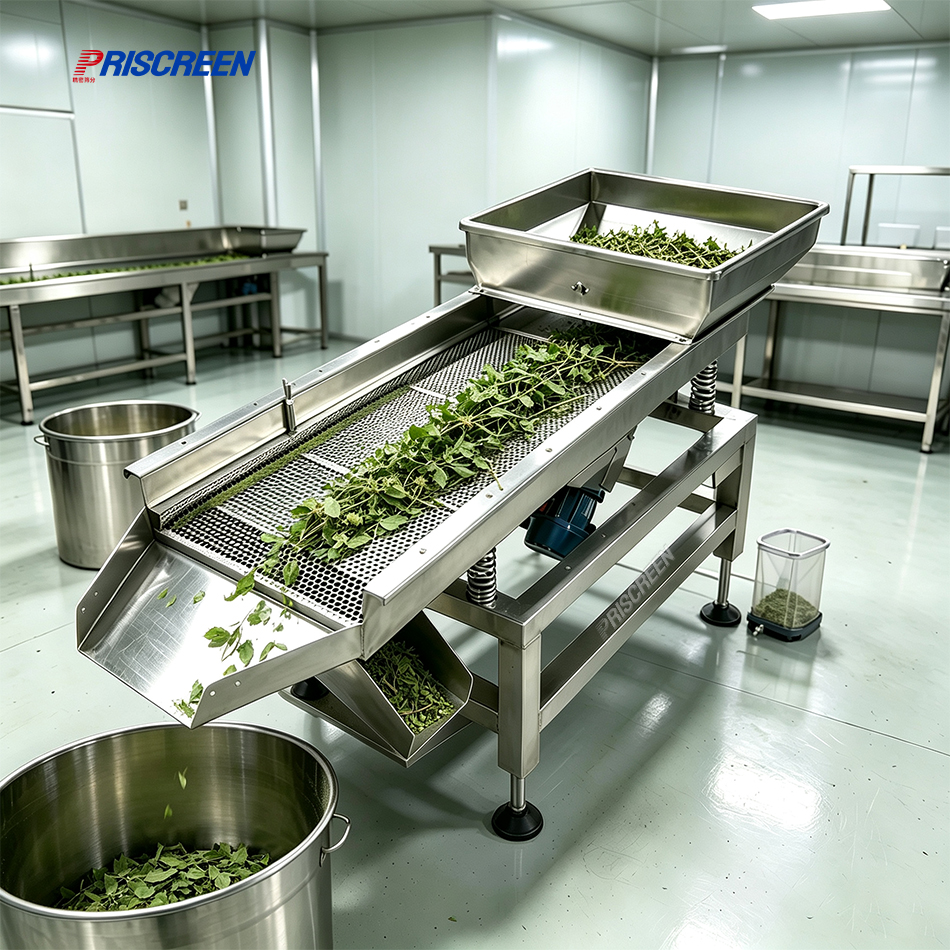
Tea leaves come in different shapes and sizes after drying, rolling and other processing steps. Small leaf fragments, tea dust and longer stems may remain mixed with the finished product. A suitable screening machine helps tea processors separate these materials before grading, blending or packaging.
Our linear vibrating screen uses a rectangular screen deck and controlled vibration to move tea leaves toward the discharge end. By selecting the appropriate screen opening and machine configuration, processors can separate different fractions according to their production requirements.
The machine can be configured for tea leaf grading, broken-leaf separation and other dry tea screening applications. The final setup depends on the tea variety, moisture content, leaf shape and required separation result.
What Can a Tea Leaf Screening Machine Separate?
Tea processing plants do not always need the same screening result. Some want to remove fine particles, while others need to separate longer stems or divide tea leaves into different size ranges.
- Tea leaf grading: Separate tea leaves into different size fractions for further processing or packaging.
- Broken tea separation: Remove small leaf fragments and fine particles when the screen opening suits the target fraction.
- Tea stem separation: Help separate certain stems and leaf fractions based on their size and shape. Long stems may require a dedicated stem-separation design.
- Foreign particle removal: Screen out suitable oversized or undersized unwanted particles, depending on their dimensions and the selected mesh.
Screening separates materials mainly by size. If tea stems and leaves have similar dimensions, or if their shapes overlap significantly, a conventional screen may not achieve complete separation. A material test helps determine the most suitable solution.
Why Use a Linear Vibrating Screen for Tea Leaves?
Continuous Material Movement
The rectangular screen deck moves tea leaves forward as the machine vibrates. This arrangement suits continuous screening processes and can be integrated into an existing tea processing line.
Adjustable Screening Configuration
Different tea varieties require different separation standards. Screen openings, the number of decks and vibration settings can be selected according to the feed material and the desired output.
Multiple Fractions in One Process
With a suitable multi-deck design, the machine can separate tea leaves into several size fractions during one operation. The actual number of grades depends on the machine configuration.
Practical Production Line Integration
The linear design supports a straightforward feeding and discharge arrangement. Depending on the plant layout, the machine can work with conveyors, collection bins or downstream packaging equipment.
Material and Structure Options
Carbon steel and stainless steel configurations may be available, depending on the application. For tea processing, discuss the required contact material, surface finish, cleaning method and hygiene requirements before placing an order.
How to Choose a Linear Vibrating Screen for Tea Leaves
Choosing a tea screening machine starts with the material rather than the machine size alone.
Tea type: Green tea, black tea, rolled tea and other products can differ in leaf shape, fragility and flow behavior.
Moisture content: Dry tea generally behaves differently from fresh or damp leaves. Moisture can affect adhesion, material movement and screen performance.
Screen opening: The opening should match the particle sizes you want to retain or remove. Very small openings are not always necessary for leaf grading.
Required capacity: Share your target throughput in kilograms or tons per hour. Actual capacity depends on the tea variety, feed condition, screen area and separation standard.
Number of fractions: Explain whether you need two-way separation, multiple size grades or a separate process for long stems.
Cleaning and contact materials: If the machine will be used for food processing, specify the required stainless steel grade and cleaning procedure.
Providing a representative tea sample, photos of the material and your target screening result will help the supplier recommend a suitable configuration.
Typical Applications in Tea Processing
A linear vibrating screen may be used at different points in a tea processing line:
- After drying, to grade tea leaves and remove selected fine fractions.
- Before blending, to make the particle size distribution more consistent.
- Before packaging, to separate unwanted fragments according to product specifications.
- In tea powder or broken-tea processing, when the screen design suits the finer material.
For delicate whole-leaf tea, the vibration intensity and material travel distance deserve particular attention. Excessive mechanical action may increase leaf breakage. Screen trials should confirm both the separation result and the condition of the finished tea.
Customize Your Tea Leaf Linear Vibrating Screen
Every tea processing line has its own requirements. We can discuss the machine dimensions, screen deck arrangement, mesh opening, contact materials, feeding method and discharge layout according to your application.
To help us assess your project, please provide:
- Tea type and whether the material is fresh, dried or processed.
- Expected capacity per hour.
- The particles or stems you want to remove.
- The required finished tea size or grading standard.
- Preferred contact material and cleaning requirements.
Our team can review these details and recommend a suitable screening configuration for your production line.
Looking for a tea leaf screening solution? Contact us with your material details and screening target to discuss the right machine for your application.