
Rice Sifter Machine
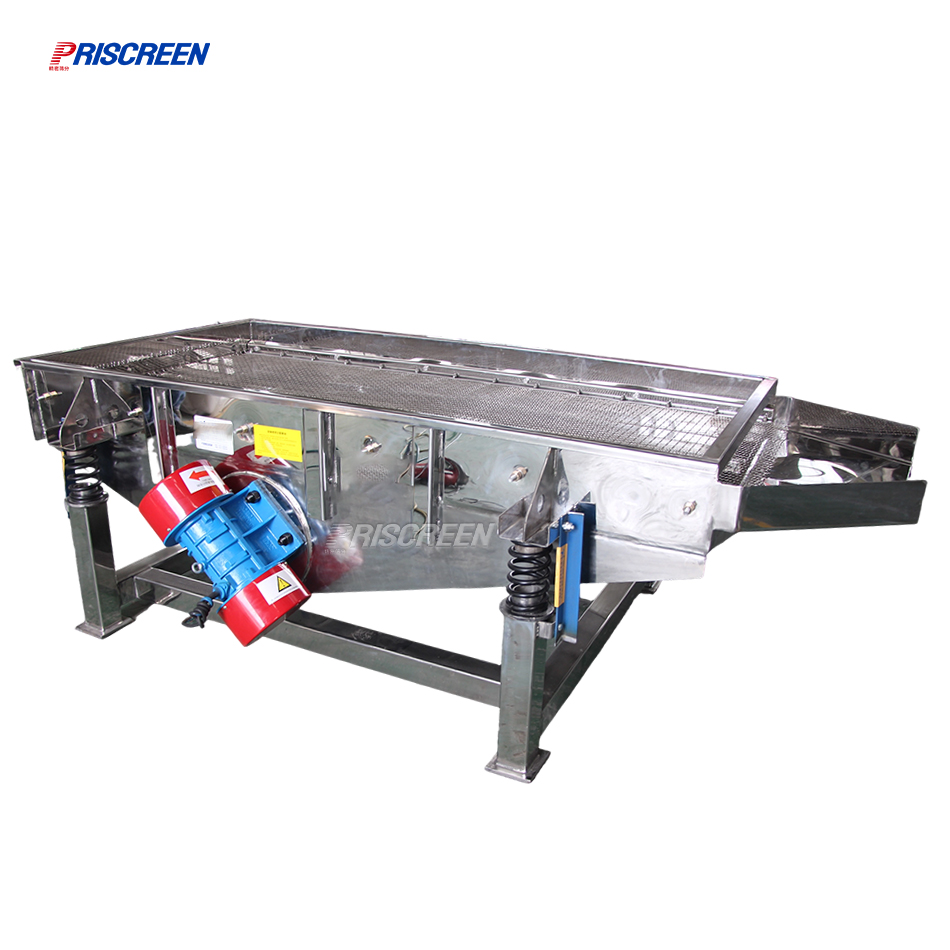
A rice sifter machine is used to screen rice grains by size and separate unwanted particles from the main product. It can be used for whole rice, broken rice and mixed rice particles in rice processing plants.
Rice is fed onto the screen surface and moves forward under vibration. Smaller particles pass through the openings, while larger grains continue toward the discharge outlet. By changing the screen mesh, the machine can be set up for different rice sizes and screening requirements.
Rice Grain Screening
Rice grains are not always the same size after milling and processing. A batch may contain whole grains, broken grains, small particles and other material that needs to be removed or separated.
A vibrating rice sifter gives these particles a simple way to separate according to size.
The rice enters from the feed inlet and spreads across the screen. Vibration keeps the material moving instead of allowing it to stay in one place. Rice particles smaller than the screen openings fall through the mesh, while larger particles remain on the screen and move to the next outlet.
The actual result depends on the rice variety, moisture, particle size, feed rate and screen mesh. For this reason, we select the screening configuration according to the material rather than using one standard mesh for every rice application.
Whole Rice and Broken Rice Separation
Whole rice and broken rice have different particle sizes, which makes screening one option for separating them.
With a suitable screen opening, smaller broken rice can pass through the screen while larger whole grains remain above the mesh.
For applications that require more than two size fractions, additional screen layers can be used. Each layer can use a different mesh to separate the material step by step.
For example:
Feed Rice → Large Grains → Medium Grains → Small Particles
The actual number of fractions and mesh sizes can be adjusted according to the rice being processed.
Removing Unwanted Particles
Rice screening is not only about size classification. A sifter can also remove particles that are noticeably different from the target rice size.
Depending on the process, the screening stage may help separate:
- Broken rice
- Small rice particles
- Oversized particles
- Rice husk particles
- Foreign particles
- Other unwanted material
A vibrating sifter can also be installed after other cleaning equipment as an additional size-based separation step.
Rice Particle Size Classification
Different rice products may require different particle-size ranges.
A single-screen machine is suitable when the process only needs one separation. If the material needs to be divided into several sizes, a multi-layer machine can handle several screening stages in one unit.
The screen mesh is the part that determines the basic separation size. Choosing the right mesh is therefore important.
If the openings are too small, the screening capacity may be reduced. If they are too large, smaller particles may remain with the larger rice grains.
Before recommending a machine, we normally need to know the rice particle size, required capacity and the separation you want to achieve.
How Does a Rice Sifter Machine Work?
The working process is straightforward:
Feeding → Screening → Size Separation → Discharge
Rice enters through the feed inlet and falls onto the screen surface. The vibration motor creates the movement needed to spread and transport the material across the screen.
During this movement, smaller particles pass through the mesh. Larger particles stay on top of the screen and continue toward the discharge outlet.
If several screening layers are installed, the material can be separated into different particle-size fractions as it passes through the machine.
The screened material can then be sent to the next processing stage by conveyor, elevator or other conveying equipment.
Rice Sifter Machine for Rice Processing
The rice sifter can be used at different points in a rice processing line, depending on the required separation.
Whole Rice Screening
Screen whole rice to remove particles that are outside the required size range.
Broken Rice Separation
Separate smaller broken rice particles from larger rice grains using a suitable screen mesh.
Rice Particle Classification
Divide rice particles into different size fractions for further processing or handling.
Rice Cleaning
Use screening as one step in a larger cleaning process to remove particles that differ in size from the main rice product.
Rice-Based Food Processing
The same screening principle can be applied to other granular rice-based materials when their particle size and flow characteristics are suitable.
Rice Sifter Machine Features
Stainless Steel Construction
304 stainless steel can be used for product-contact parts in food-processing applications. 316L is also available for applications requiring higher corrosion resistance.
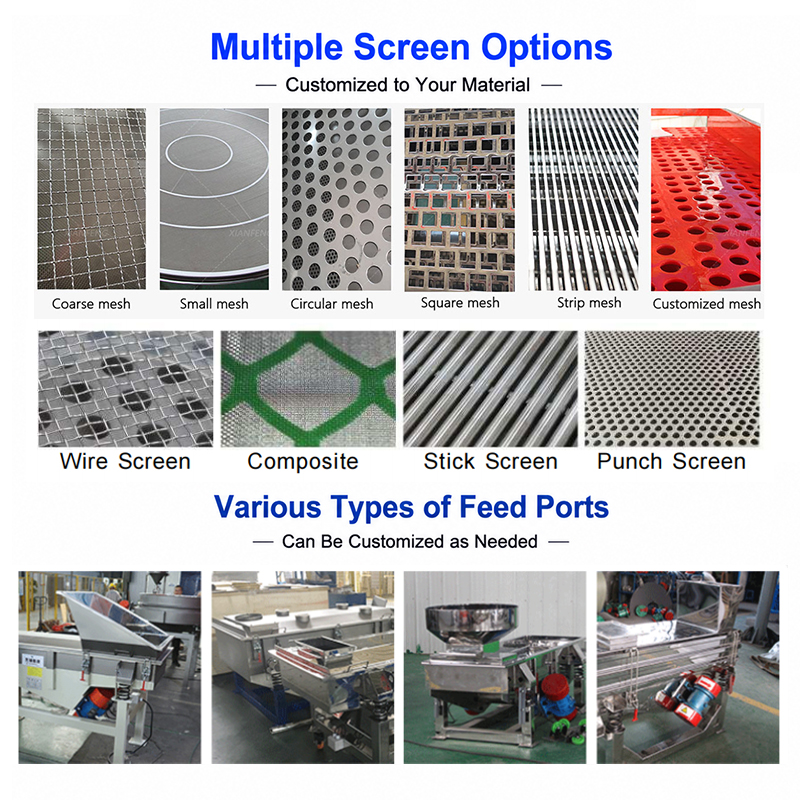
Customized Screen Mesh
The screen mesh can be selected according to the rice particle size and required separation.
Single or Multiple Layers
A single layer is suitable for basic screening. Multiple layers can separate several particle-size ranges in one machine.
Continuous Operation
The vibrating screening system allows rice to enter and leave the machine continuously, making it suitable for production lines.
Customized Inlet and Outlet
The feed and discharge ports can be adjusted to match the layout of the processing line.
Easy Screen Maintenance
The screen can be accessed for inspection, cleaning and replacement when required.
Production Line Integration
The rice sifter can be connected with vibrating feeders, belt conveyors, screw conveyors, bucket elevators, packing machines and other equipment.
Rice Sifter Machine Specifications
| Item | Options |
|---|---|
| Application | Rice grain screening and size separation |
| Material | Whole rice, broken rice, rice particles |
| Machine Type | Rotary vibrating sifter / Linear vibrating screen |
| Contact Material | 304 / 316L stainless steel |
| Construction | Stainless steel / Carbon steel |
| Screen Layers | Single or multiple layers |
| Screen Mesh | Customized |
| Screening Method | Particle-size separation |
| Discharge | Customized |
| Operation | Continuous |
| Installation | Standalone or production line |
How to Choose a Rice Sifter
The right machine depends on the rice and the result you need from screening.
Rice type: Tell us whether you are processing whole rice, broken rice, mixed rice or another rice-based material.
Particle size: The approximate size range of the feed material helps determine the screen mesh.
Capacity: Provide the required capacity in kg/h or t/h. This is important when selecting the screening area and machine size.
Separation requirement: Tell us which particles you want to keep and which particles need to be removed or separated.
Number of fractions: If you only need one separation, a single screen may be enough. Several layers can be used for multiple size fractions.
Construction material: Stainless steel is commonly selected for food-processing applications. Carbon steel can also be used where the application allows it.
Rice Sifter Machine Manufacturer
Henan Precision Screening Machinery manufactures vibrating screening and conveying equipment for different industrial applications.
For rice screening, the machine can be configured according to the material, capacity, screen mesh and required separation. We can also provide feeders and conveying equipment when the sifter needs to be connected with other processing equipment.
Instead of selecting a machine only by model number, we recommend checking the actual rice sample and screening requirement first. This helps determine the screen opening, number of layers and suitable machine configuration.
Request a Rice Sifting Solution
If you are looking for a rice sifter machine, send us a few basic details:
- Rice type
- Feed particle size
- Required capacity
- Whole rice and broken rice separation requirement
- Desired screen mesh, if known
- Number of size fractions
- Stainless steel or carbon steel requirement
With this information, we can recommend a suitable screening configuration for your rice processing line.