
Pea Powder Sifter
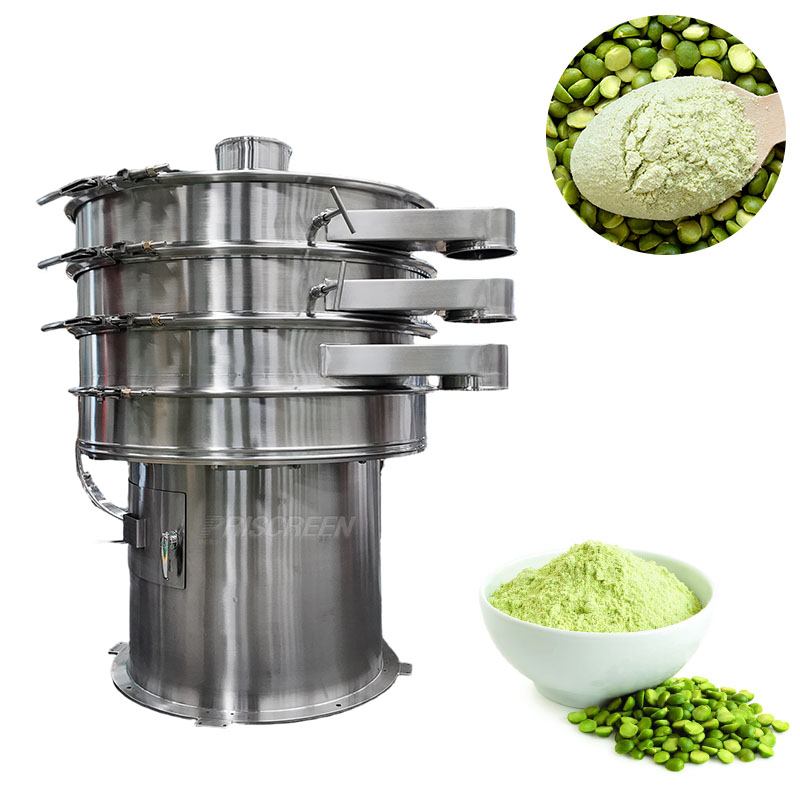
Pea powder can develop lumps during storage and handling, and its particle size may vary after milling or processing. A suitable screening machine helps remove oversized particles and separate the powder according to the required mesh size before the next production step.
Our Pea Powder Sifter is designed for screening dry pea powder and similar powdered materials. The machine uses vibration to move material across the screen, allowing particles that meet the selected size requirement to pass through while larger particles move toward a separate outlet.
For pea protein powder and other fine powders, screen selection is particularly important. Powder characteristics, moisture content and the required screening fineness all affect the final result.
Why Use a Pea Powder Screening Machine?
In powder processing, screening is often needed before mixing, blending, packing or further processing. The right machine can help make this step more consistent and reduce the need for manual sieving.
Remove Lumps and Oversized Particles
Powder may contain agglomerates formed during storage, transportation or processing. A vibrating sifter separates particles according to the selected screen opening, helping remove lumps that do not meet the required size.
Maintain Consistent Particle Size
When a production process requires a more uniform powder size, screening provides a practical way to separate finer particles from larger ones. The screen mesh should match the intended product specification.
Support Continuous Production
Manual sieving can become time-consuming when production volumes increase. A vibrating screening machine can handle continuous feeding and discharge when properly matched to the material and production line.
Reduce Screen Mesh Blockage
Fine pea powder and pea protein powder may present screening challenges depending on their moisture, cohesiveness and flowability. For materials that tend to block the mesh, an ultrasonic screening system or another suitable screen-cleaning arrangement can be considered.
How Does a Pea Powder Sifter Work?
The screening process is straightforward.
- Feeding: Pea powder enters the screening chamber through the feed inlet.
- Material distribution: Vibration spreads the powder across the screen surface.
- Particle separation: Particles smaller than the selected mesh openings pass through the screen.
- Oversize discharge: Larger particles remain above the screen and move toward the discharge outlet.
- Collection: The screened powder and oversize material are collected separately.
The actual separation result depends on the particle-size distribution, screen mesh, feed rate and material properties. A screening test can help determine the most suitable configuration.
Key Features of Our Pea Powder Sifter
Customizable Screen Mesh
Choose the screen mesh according to your target particle size and screening requirements. If you are unsure which mesh to use, provide a sample specification or the desired screening result for evaluation.
Single-Layer or Multi-Layer Design
A single-layer machine is suitable for basic screening and oversized particle removal. Multiple layers can be used when the process requires separation into different particle-size ranges.
Stainless Steel Construction Options
Stainless steel contact parts are available for applications that require easier cleaning and corrosion resistance. The appropriate material grade and surface finish depend on the powder, cleaning procedure and production requirements.
Optional Ultrasonic Screening System
For fine powders that are difficult to screen, an ultrasonic system can help reduce mesh blockage. Its suitability should be evaluated according to the powder characteristics and selected screen mesh.
Flexible Feed and Discharge Arrangements
Feed inlets and discharge outlets can be configured to match the layout of your processing line. The machine can also be integrated with suitable conveyors, hoppers and powder-handling equipment.
Easy Inspection and Screen Replacement
A practical screening structure makes routine inspection and screen replacement easier. The required cleaning procedure should be considered when choosing the machine configuration.
Pea Powder Sifter Specifications
| Item | Available Options |
|---|---|
| Machine type | Circular vibrating sifter |
| Application | Pea powder screening and particle separation |
| Construction material | Stainless steel or carbon steel |
| Product-contact material | 304 or 316L stainless steel options |
| Screening layers | Single or multiple layers |
| Screen mesh | Selected according to material and target size |
| Screen cleaning | Suitable cleaning system; ultrasonic option available |
| Feed inlet | Customizable |
| Discharge outlet | Customizable |
| Installation | Standalone or production-line integration |
The final machine configuration depends on the material, required capacity, particle size, moisture content and screening target. Actual capacity should be confirmed for the specific application rather than estimated from machine diameter alone.
Applications of a Pea Powder Sifter
Pea Flour Processing
Pea flour can be screened after milling to separate oversized particles and achieve a particle-size range suitable for the next processing step.
Pea Protein Powder Processing
Pea protein powder may require fine screening to remove agglomerates or separate particles according to a specified size range. Its flowability and tendency to block the mesh should be evaluated before selecting a screening system.
Plant-Based Food Ingredients
The machine may also be suitable for screening other dry plant-based powders, provided the material properties and required screening result are compatible with the selected configuration.
Different powders should be evaluated separately. A screen configuration that works well for pea flour may not deliver the same performance with fine pea protein powder.
How to Choose the Right Pea Powder Sifter
Before selecting a machine, consider the following points.
1. Material type
Confirm whether you need to screen pea flour, pea powder or pea protein powder. These materials may behave differently during screening.
2. Required capacity
Provide your target throughput in kg/h or t/h. The suitable machine size depends on both capacity and the required separation result.
3. Target particle size
Tell us which particles should pass through the screen and which should be retained. This information helps determine the appropriate mesh.
4. Screen blockage
If the powder is fine, cohesive or prone to electrostatic buildup, a suitable mesh-cleaning solution may be necessary.
5. Contact material
Specify whether you require stainless steel contact parts and whether your process has particular cleaning or corrosion-resistance requirements.
6. Production line layout
The feed inlet height, outlet direction and available installation space should match your existing equipment.
Integration with Powder Processing Equipment
A Pea Powder Sifter can operate as a standalone machine or as part of a powder-processing line.
Depending on the process, the screening stage may be connected to:
- Screw conveyors for enclosed powder transfer
- Vacuum conveyors for suitable powder-handling applications
- Hoppers and feeding equipment
- Mixing or blending equipment
- Packing machines
The equipment arrangement should account for dust control, feeding consistency, cleaning access and the space available in the production area.
Customized Pea Powder Screening Solutions
Different plants have different production targets. Some need to remove occasional lumps, while others require fine screening or separation into multiple particle-size ranges.
We can evaluate the appropriate vibrating screening machine according to your material and process requirements. Options may include screen mesh, machine size, number of layers, contact material, ultrasonic assistance and customized inlet and outlet positions.
For fine pea protein powder, providing a material sample or detailed powder specifications can help us assess the screening method more accurately.
Request a Pea Powder Sifter
Looking for a screening machine for pea flour, pea powder or pea protein powder?
Send us a few details about your application so we can recommend a suitable configuration.
- Material name
- Required capacity in kg/h or t/h
- Target particle size or mesh size
- Desired screening result
- Number of screening fractions
- Material of construction
- Any mesh-blocking or cleaning concerns
Contact us to discuss a Pea Powder Sifter for your production line.
-
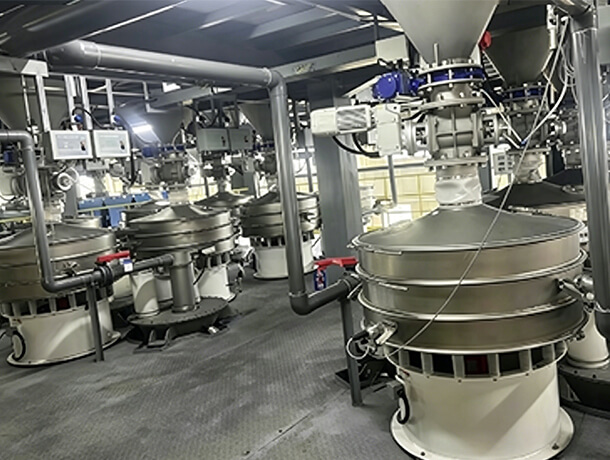 Ultrasonic Vibrating Screen for Lithium Battery Powder Sieving
Our Ultrasonic Rotary Vibrating Screen is specially designed for the lithium battery industry, delivering high-precision screening performance for ultra-fine powders such as lithium iron phosphate (LFP), graphite, conductive agents, and ternary materials. Unlike conventional ultrasonic screening systems, we conduct tens of thousands of frequency tests to precisely match the ultrasonic power supply, transducer, and screen frame resonance frequencies. This advanced resonance matching technology effectively prevents mesh tearing, blackening, and burning, while significantly improving screening stability, mesh service life, and continuous production efficiency. The result is lower maintenance costs, reduced downtime, and more reliable long-term operation for lithium battery production lines.
-
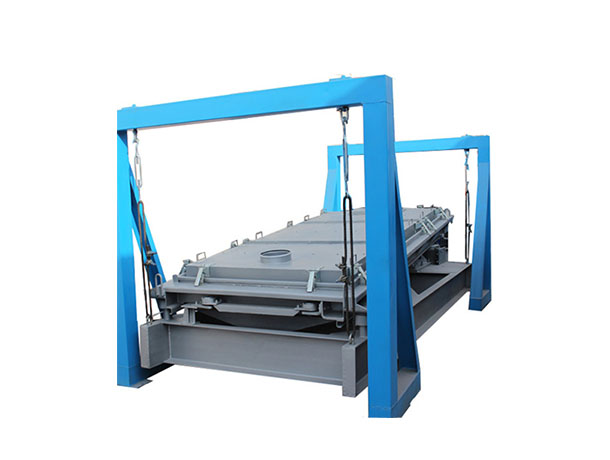 Flat Gyratory Screen
The Flat Gyratory Screen is a state-of-the-art, high-efficiency screening solution. Due to its unique reciprocating motion trajectory
-
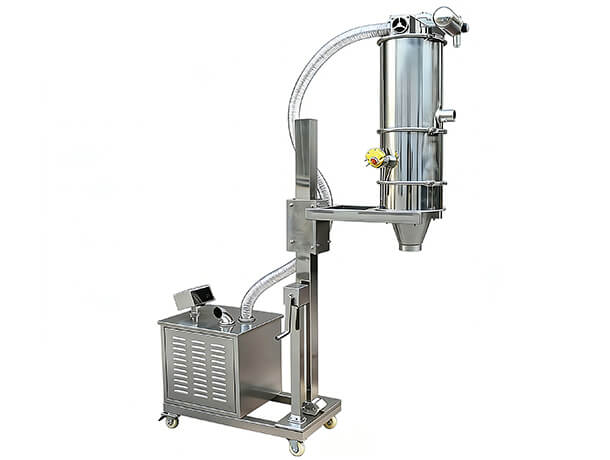 Vacuum Conveyor
The vacuum conveyor is the most advanced, perfect vacuum conveying equipment of powder material, granular material, powder -granular mixture, Designed for fully enclosed material transfer, it’s an ideal choice for pharmaceutical and food factories pursuing GMP compliance and clean production.
-
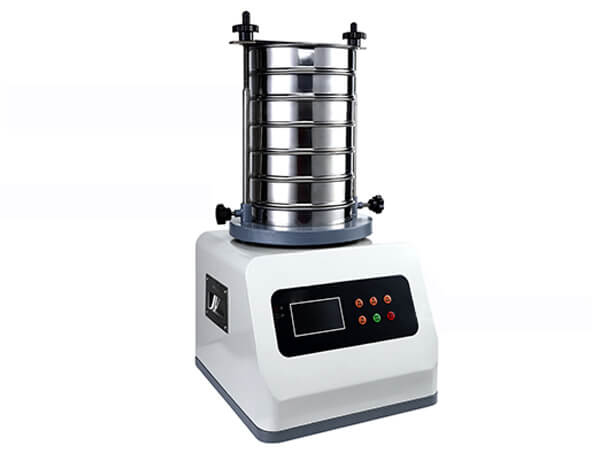 Standard Analysis Sieves
Standard Analysis Sieve (also known as a Test Sieve or Inspection Sieve) is an integrated standard analysis unit designed for both powder, particle grading and liquid filtration.