Choosing the right rotary vibrating screen is one of the most important decisions when designing or upgrading a screening process. The correct machine improves product quality, increases screening efficiency, reduces maintenance costs, and extends equipment life. An unsuitable model, however, may lead to low throughput, mesh blockage, excessive wear, and unnecessary downtime.
Whether you are processing food powders, chemical materials, minerals, plastics, or battery materials, selecting a rotary vibrating screen should be based on your specific production requirements rather than simply choosing the largest or least expensive machine.
This guide explains the key factors to consider before purchasing a rotary vibrating screen and provides practical recommendations to help you make an informed decision.
What Is a Rotary Vibrating Screen?
A Rotary Vibrating Screen (also known as a Rotary Vibrating Sieve or Circular Vibrating Separator) is a high-precision screening machine designed to separate powders, granules, and certain liquid materials according to particle size.
A vertical vibration motor generates three-dimensional movement, allowing materials to spread evenly across the screen surface for efficient separation.
Common Applications
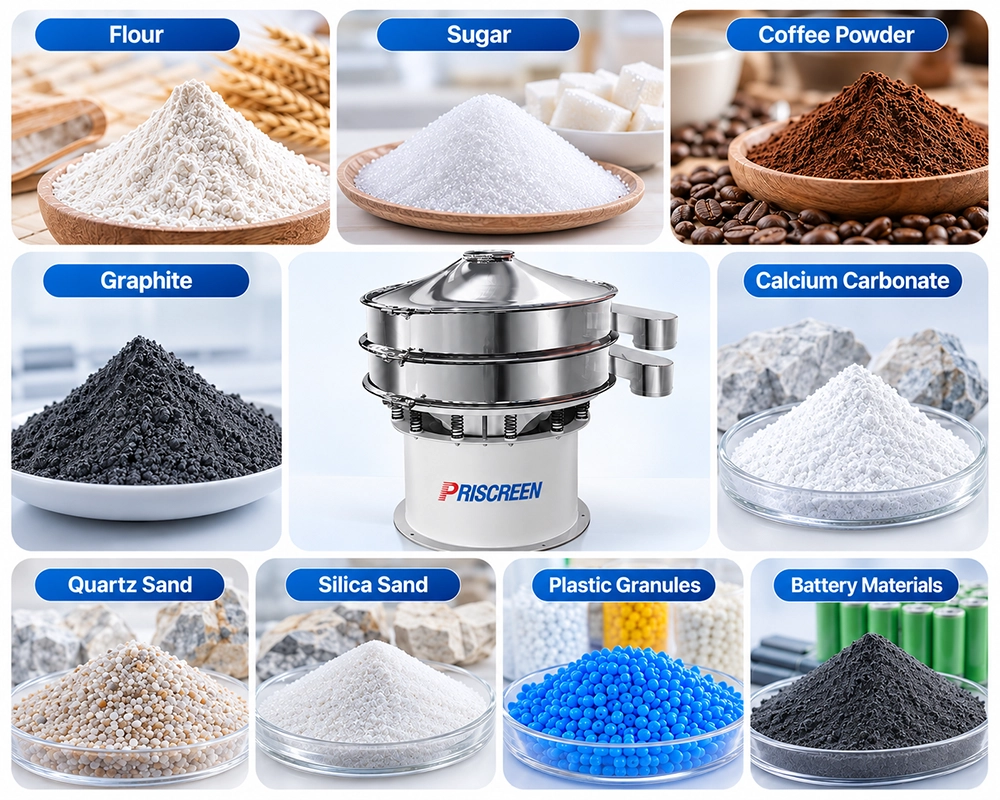
- Flour, starch, granulated sugar, table salt
- Powdered milk, ground coffee, cocoa powder
- Graphite powder, calcium carbonate, quartz sand, silica sand
- Plastic pellets, chemical fertilizers, battery raw materials
How Does a Rotary Vibrating Screen Work?
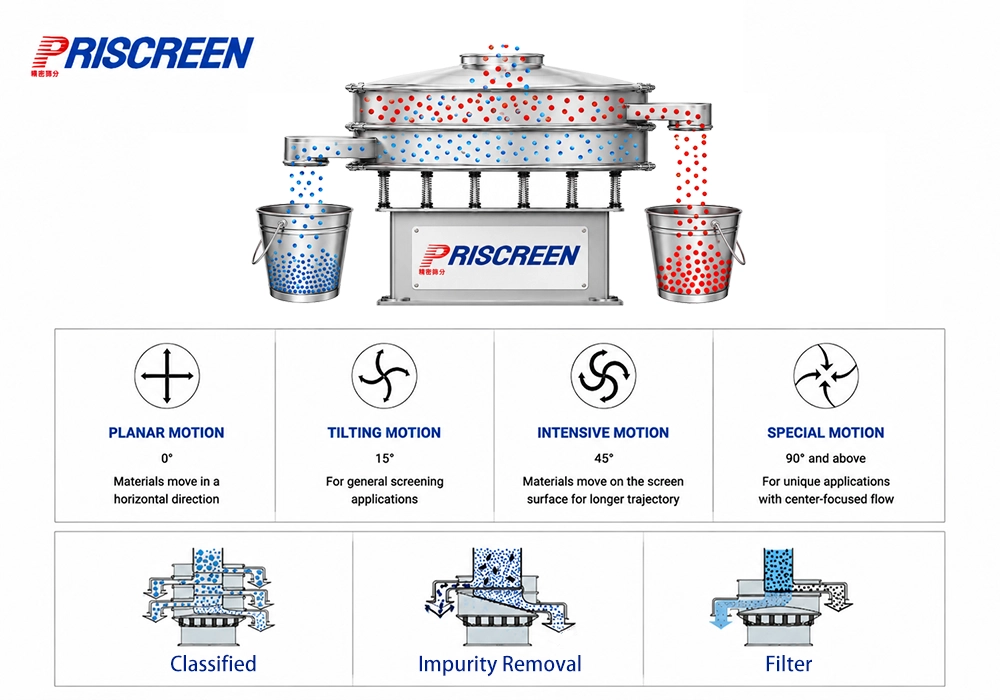
The vibration motor generates horizontal, vertical, and inclined movements simultaneously. These combined motions cause materials to move in a spiral pattern across the screen surface, ensuring accurate particle separation.
Compared with manual sieving, rotary vibrating screens offer:
- Higher screening accuracy
- Faster processing speed
- Lower labor costs
- Stable product quality
- Continuous operation
8 Key Factors to Consider Before Buying
1. Understand Your Material
Every material behaves differently during screening.
Before selecting a machine, collect the following information:
- Material name
- Particle size
- Moisture content
- Bulk density
- Temperature
- Abrasiveness
- Corrosiveness
- Required screening accuracy
Example
| Material | Recommended Configuration |
| Flour | SUS304 Stainless Steel |
| Sugar | Food-grade Rotary Vibrating Screen |
| Graphite Powder | Ultrasonic Rotary Vibrating Screen |
| Quartz Sand | Heavy-duty Rotary Vibrating Screen |
| Plastic Granules | Standard Rotary Vibrating Screen |
2.Determine Your Required Capacity
Capacity is usually expressed in:
- kg/h
- t/h
Machine size should match production demand.
Choosing a larger machine does not always improve efficiency.
Material characteristics often influence capacity more than machine diameter.
Example Capacity
| Diameter | Typical Capacity |
| 600 mm | 100–500 kg/h |
| 800 mm | 300–1000 kg/h |
| 1000 mm | 500–2000 kg/h |
| 1200 mm | 1000–3000 kg/h |
| 1500 mm | 2000–5000 kg/h |
Actual capacity depends on material properties and mesh size.
3. Choose the Correct Mesh Size
Mesh size determines the final particle size.
Common Mesh Sizes
| Mesh | Opening |
| 20 Mesh | 0.85 mm |
| 40 Mesh | 0.425 mm |
| 60 Mesh | 0.25 mm |
| 80 Mesh | 0.18 mm |
| 100 Mesh | 0.15 mm |
| 200 Mesh | 0.075 mm |
Finer mesh improves separatiActual capacity depends on material properties and mesh size.
4. Select the Proper Machine Diameter
Typical models include:
- 400 mm
- 600 mm
- 800 mm
- 1000 mm
- 1200 mm
- 1500 mm
Selection should consider:
- Required capacity
- Installation space
- Material characteristics
- Future production expansion
5. Choose the Number of Decks
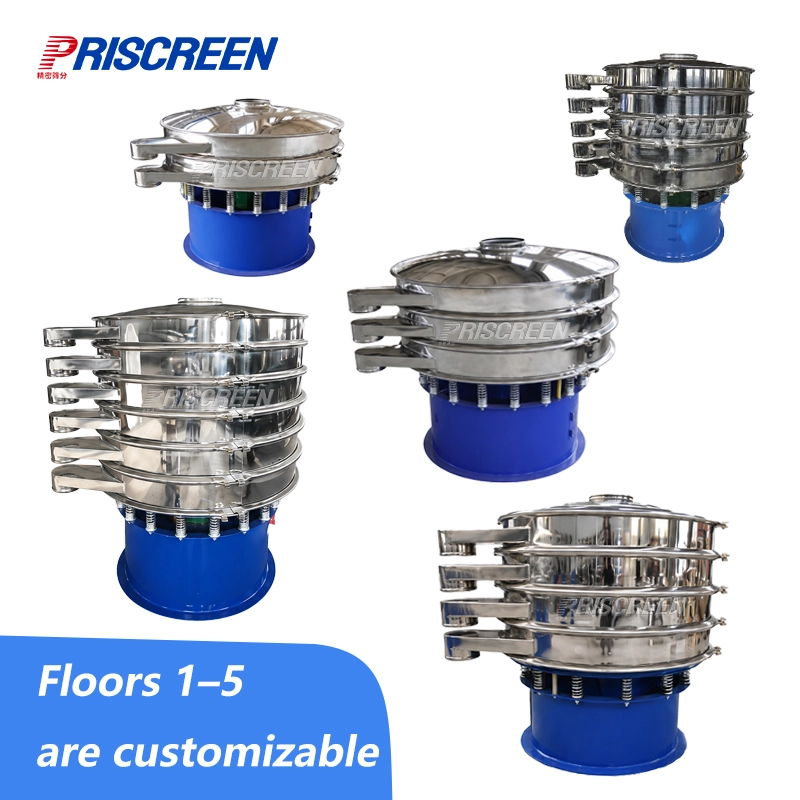
Rotary vibrating screens are available with multiple deck configurations.
- Single Deck
- Double Deck
- Triple Deck
- Four Deck
- Five Deck
Multiple decks enable several particle sizes to be separated simultaneously, improving production efficiency.
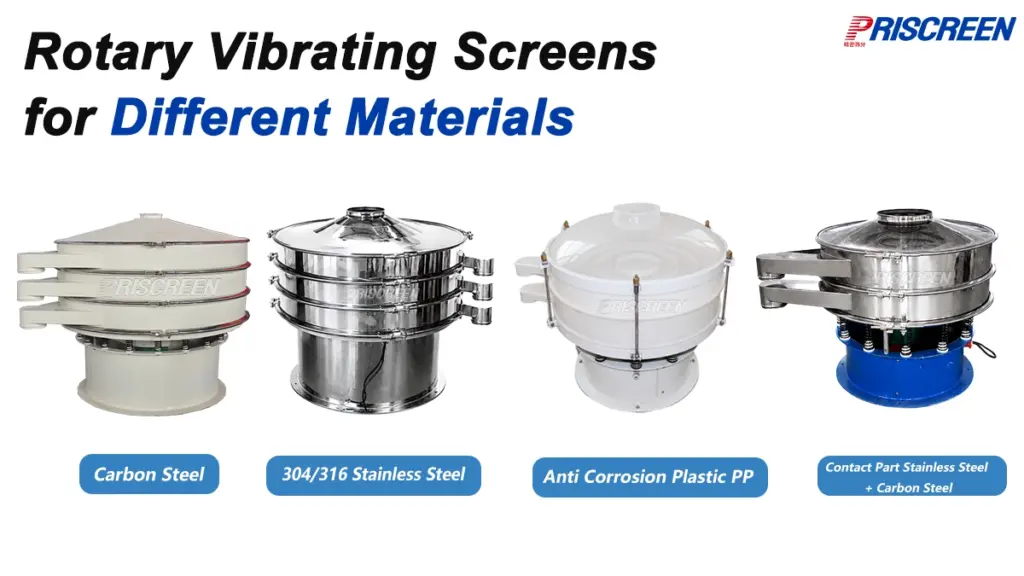
6. Select the Right Construction Material
Different industries require different machine materials.
Carbon Steel
Suitable for:
- Mining
- Building Materials
- Sand
- Stone
Advantages:
- Lower cost
- High strength
SUS304 Stainless Steel
Suitable for:
- Food Processing
- Chemical Industry
- Fine Powder
Advantages:
- Corrosion resistance
- Easy cleaning
- Hygienic design
SUS316L Stainless Steel
Recommended for:
- Highly corrosive materials
- High-purity processing
- Special chemical applications
7. Consider Additional Options
Optional configurations may include:
- Ultrasonic Screening System
- Explosion-proof Motor
- Frequency Inverter
- Mobile Wheels
- Inspection Window
Selecting appropriate options can significantly improve efficiency and maintenance convenience.
8. Choose an Experienced Manufacturer
When comparing suppliers, evaluate:
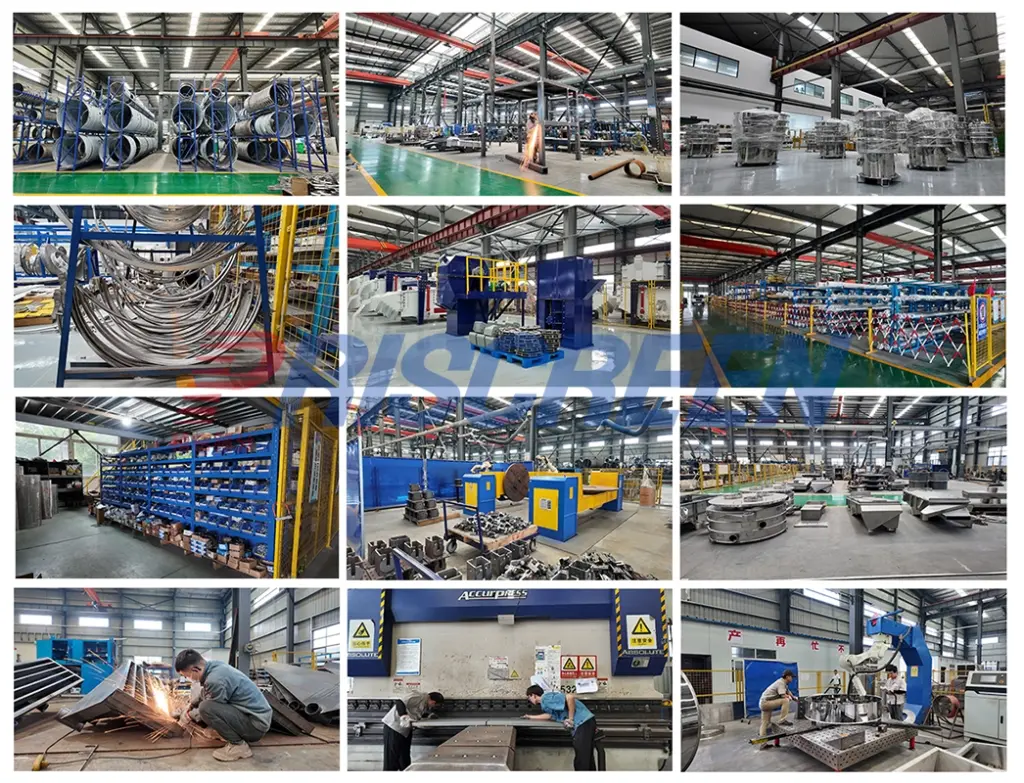
- Manufacturing experience
- Engineering capability
- Quality control
- Customization options
- After-sales support
- Spare parts availability
A reliable manufacturer should recommend equipment based on your material and production requirements instead of offering a one-size-fits-all solution.
Recommended Machine Selection by Material
| Material | Recommended Machine |
| Flour | Food-grade Rotary Vibrating Screen |
| Sugar | Rotary Vibrating Screen |
| Coffee Powder | Stainless Steel Vibrating Screen |
| Calcium Carbonate | Rotary Vibrating Sieve |
| Quartz Sand | Heavy-duty Rotary Screen |
| Silica Sand | Large Capacity Rotary Screen |
| Graphite Powder | Ultrasonic Rotary Screen |
| Plastic Granules | Rotary Separator |
| Fertilizer | Rotary Vibrating Screen |
| Lithium Battery Materials | High Precision Rotary Vibrating Screen |
Common Mistakes Buyers Make
Many buyers focus primarily on price.
However, the following mistakes often lead to poor performance:
- Choosing the wrong mesh size
- Ignoring material properties
- Purchasing an undersized machine
- Selecting unsuitable construction materials
- Overlooking maintenance convenience
- Ignoring future production expansion
Frequently Asked Questions
What materials can a rotary vibrating screen process?
Rotary vibrating screens are suitable for powders, granules, pellets, and certain liquid materials used in food processing, chemicals, minerals, plastics, recycling, and battery material production.
What mesh sizes are available?
Standard meshes range from 2 Mesh to over 500 Mesh depending on the application.
Can one machine separate multiple sizes?
Yes. Multi-deck rotary vibrating screens can separate two to five particle sizes in a single screening process.
Which stainless steel material should I choose?
SUS304 is suitable for most food and industrial applications, while SUS316L is recommended for highly corrosive or high-purity materials.
Selecting the right rotary vibrating screen requires a clear understanding of your material characteristics, production capacity, screening accuracy, and installation requirements. By carefully evaluating these factors, you can improve screening efficiency, reduce maintenance costs, and ensure consistent product quality.
If you are unsure which model best suits your application, explore our rotary vibrating screen products or consult an experienced manufacturer who can recommend the most appropriate solution based on your production needs.